By Dickson Omobola
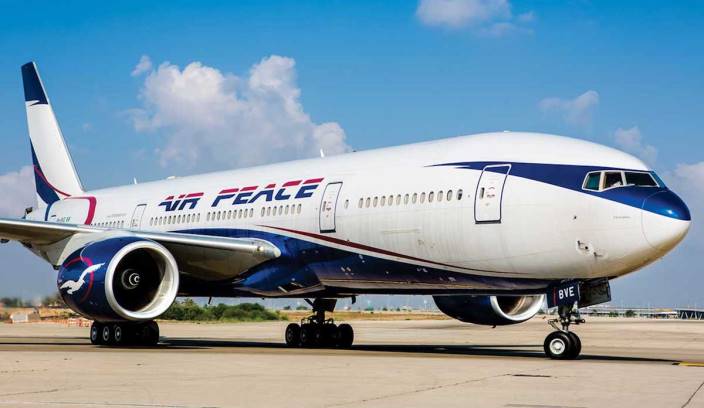
The decision of aviation unions to picket Nigeria’s largest airline, Air Peace, Tuesday, has elicited sharp criticism from stakeholders in the country’s air transport sector, with many saying the action constituted serious safety and security concerns.
From the early hours of Tuesday until about noon, members of the National Union of Air Transport Employees, NUATE, and the Air Transport Services Senior Staff Association of Nigeria, ATSSSAN, backed by the Nigeria Labour Congress, NLC, and the Trade Union Congress, TUC, disrupted Air Peace’s operations over the alleged non-remittance of the five per cent Ticket Sales Charge, TSC, to the Nigeria Civil Aviation Authority, NCAA, and the right of workers to unionise.
The industrial action followed a series of ultimatums the unions said they issued to the Airline Operators of Nigeria, AON. The latest came on August 7, when the unions gave airlines a three day notice, threatening to picket operators that failed to remit the statutory five per cent TSC to the NCAA and allow their staff to join aviation unions.
Acting on the threat, union members converged on the domestic terminals of the Murtala Muhammed Airport, Lagos, and the Nnamdi Azikiwe International Airport, Abuja, where they singled out Air Peace, blocked access to its counters and prevented the airline’s scheduled flights from departing until the Minister of Aviation and Aerospace Development, Mr Festus Keyamo, intervened.
The action, which disrupted more than half of the airline’s operations that day, left thousands of passengers stranded and caused the airline to lose more than N2 billion in revenue.
Memories
The incident, which sparked debate over the implications of industrial disputes for aviation safety, airport security and passenger confidence, revived memories of previous occasions when labour disputes led to the disruption of airline operations, exposing travellers to the fallout.
Over a decade ago, precisely March 13, 2013, members of NUATE and ATSSSAN grounded Aero Contractors’ operations over allegations of poor staff welfare and anti-union practices. The action stranded more than 100 passengers at the Domestic Terminal of the Murtala Muhammed Airport 2, MMA2, in Lagos.
On March 23, 2017, aviation unions also grounded Arik Air’s operations at the General Aviation Terminal, GAT, of the Murtala Muhammed Airport, Lagos. Three years later, specifically on September 13, 2020, NUATE and ATSSSAN again disrupted Arik Air’s operations by barricading the entrance to the airline’s operational headquarters in Lagos over unresolved labour issues.
Passengers lament
However, passengers caught in the disruption that happened on Tuesday were left to grapple with missed appointments and what could be an unexpected financial loss. Speaking to Saturday Vanguard, a passenger who simply identified himself as Chinedu said: “I had a flight for 7:00 am. My mum fell sick last night (Monday) and she was rushed to the hospital. I had hoped that I would get to Abuja early today so that I could look after her, as my siblings are not there to do so.”
Kitty Kat, who took to X to express her frustration, said: “I received a flight reminder at 2 am both via text and email only to arrive at the airport and encounter this development. No proper information, no communication from the airline. We’re just being told that no Air Peace aircraft is leaving the airport today, regardless of your destination. Honestly, this is beyond frustration. You plan, you prepare, you get to the airport on time, and then this happens with zero explanation.”
Experts’ views
Commenting on the issue, former commandant of the Murtala Mohammed International Airport, Lagos, Group Captain John Ojikutu, retd, described the unions’ action as unlawful.
Ojikutu, in a chat with Saturday Vanguard, also called for regulations prohibiting acts of unlawful interference with aviation activities at airports.
He said: “As far as I am concerned, there is a regulatory authority in aviation and that is the NCAA. Aviation is governed by international law. That is why I said it is the negligence of the NCAA that resulted in the action. The NCAA should produce a law that removes acts of unlawful interference in the activities of aviation in the airport. Or put it as a guideline for the Federal Airports Authority of Nigeria, FAAN.
“If they (the unions) have to picket the airline, let them go to the airline’s office, not the airport. The airline has an office outside the airport. They should go there and protest there. The picketing did not affect only Air Peace; it also affected others. It has a negative effect on this country. I am surprised that the NCAA is not treating this as its responsibility.
“Suppose there were people who had infiltrated them (the unions). I am also surprised that the DSS was there and did not look into it. What is aviation? Aviation is a national security asset.
Contempt
For former Acting Director-General/Managing Director of the NCAA, Engr Benedict Adeyileka, the unions acted in contempt of court because there was a subsisting judgment of the Federal High Court on Air Peace and the unions.
Speaking to Saturday Vanguard, Adeyileka said: “From a neutral and a regulatory point of view: the minister, to the best of my knowledge, had intervened in the issue. They were all still in the process of talking about strike or no strike and remittance or no remittance. However, if you want to picket, take it completely away from the restricted areas. Moreover, the court had given an order. That is contempt of court, and it is a very serious thing.
“The unions are saying that some airlines owe money. Are they the collecting agency? There are legal avenues through which the NCAA can recover its money. They can go to court and obtain judgments, after which court bailiffs can lawfully seize assets equivalent to the amount owed. There is also an allegation that Air Peace and some other airlines do not allow unions in their organisations. But being a member of a union is voluntary.”
Airline’s position
Meanwhile, Air Peace’s Chief Operating Officer, Mrs Oluwatoyin Olajide, warned that if affected passengers seek compensation over the disruption, the unions responsible for the picketing should be held liable for the consequences of their actions.