By Peter Duru, Makurdi
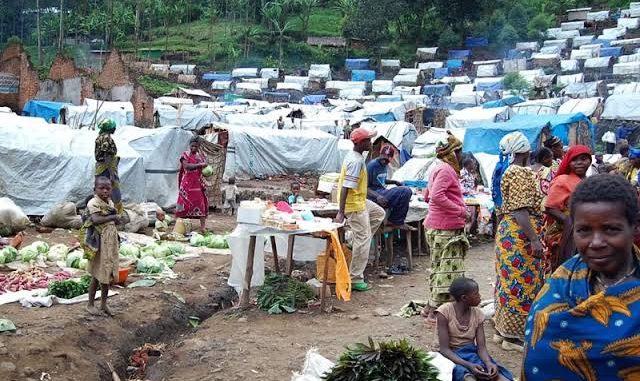
The Benue State Emergency Management Agency (SEMA) says it has spent more than N160 million on the treatment of snakebite victims between March and September as part of efforts to provide healthcare services to Internally Displaced Persons (IDPs) and the vulnerable in the state.
The Executive Secretary of SEMA, James Iorpuu, disclosed this while outlining the agency’s interventions in healthcare, food distribution, protection, education, resettlement and livelihood support for displaced persons, despite funding and logistical constraints.
Iorpuu also disclosed that 248 community reporters had been trained to monitor and report incidents in IDP camps and host communities, while 163 displaced children had enrolled in a federal government exchange programme.
He said the agency was also working with humanitarian partners, including the United Nations High Commissioner for Refugees (UNHCR), to facilitate resettlement and help displaced families rebuild their livelihoods.
“We have been spending money on healthcare for our displaced persons. Between March and September, we spent more than N160 million on snakebites alone,” he said.
According to him,”the agency has also made arrangements for IDPs who require medical attention to receive treatment at the Benue State University Teaching Hospital, BSUTH. We have medical personnel coordinating the process, including two nurses working with the hospital to assess patients, stabilise them and refer them to specialists where necessary.”
“One of our major challenges is transportation. We do not have sufficient mobility resources to convey patients to medical facilities promptly, but we continue to make arrangements to ensure that those who need medical attention receive assistance.”
“Food distribution is only one aspect of our responsibility. We have continued to distribute food to displaced persons despite the reduction in available supplies, but our interventions also cover healthcare, education, protection, resettlement and livelihood support,” Iorpuu said.
“On protection, we have trained 248 community reporters who provide real-time information about incidents in IDP camps and surrounding communities. Where cases of sexual and gender-based violence are reported, we refer them to the police for appropriate action. We are also working to expand the reporting mechanism to more communities while protecting the identities of the reporters.”
“On education, 163 displaced children have enrolled in the Secondary School exchange programme. We want to ensure that displacement does not permanently deprive these children of schooling. We are also working to provide support that will enable them to access educational opportunities despite their circumstances,” he said.
“Regarding resettlement, we have moved displaced persons out of school buildings in Naka to a designated location. We are also working with partners, including UNHCR, on resettlement interventions involving shelters, healthcare facilities and other basic infrastructure to improve the living conditions of displaced families.”
“At Akile in Makurdi Local Government Area, we have moved about 110 displaced persons to an area where they can begin rebuilding their lives through farming and other productive activities. The idea is to provide them with opportunities to cultivate crops, harvest their produce, sell them and keep the proceeds rather than depend indefinitely on humanitarian assistance,” Iorpuu said.
“These challenges cannot be addressed by SEMA alone. We need coordinated efforts involving the state and federal governments, local authorities, humanitarian organisations and affected communities. Our ultimate objective is to ensure that displaced persons can return to their ancestral homes when it is safe, while those who cannot return immediately have access to decent shelter, healthcare, education and sustainable livelihoods,” the Executive Secretary said.