By Abba Anwar
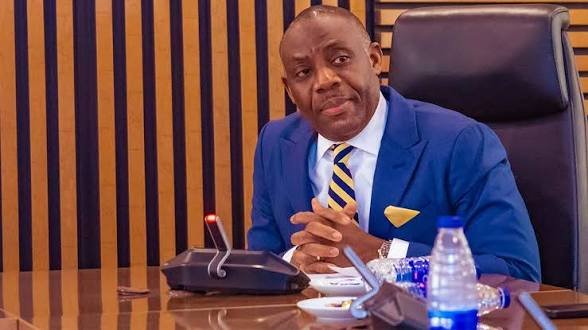
I read with considerable interest and curiosity a cover-page story on Hon. Abubakar Kabir Bichi, the member representing Bichi Federal Constituency in Kano State, published by Daily Trust on Saturday, 17 October 2026, under the headline “Abba Bichi: Generosity and the Money Question.”
The story caught my attention for the simple reason that Hon. Bichi is from my state and is one of its most popular legislators. By virtue of several factors, notably his position as Chairman of the House Committee on Appropriation in the House of Representatives, he stands out among many of his colleagues.
I understand that Daily Trust tried as much as possible to be objective in its presentation of the issues to the public, while framing and presenting the story from its chosen professional standpoint.
Granted, as the newspaper noted, “The Chairmanship of the Appropriation Committee is widely regarded as one of the most influential positions in the House of Representatives because of its central role in the budget process.” Nevertheless, it is equally important to acknowledge that Hon. Bichi’s concern for the development of his constituency, as well as his deep interest in empowering his constituents, plays an invaluable role in strengthening his political influence. This is in addition to the fact that some of his colleagues reportedly refer to him as “Member General.”
A historical account of the chairmanship of the House Committee on Appropriation, particularly as it relates to Kano State since the return to democratic rule in 1999, is worth examining. Kano has occupied the position on three occasions before Hon. Bichi’s current tenure, making his tenure the fourth. However, I would argue that the level of infrastructural development and human empowerment associated with the position has never been more visible than it is now, under Hon. Bichi’s leadership.
The current Deputy President of the Senate, Senator Barau I. Jibrin, PhD, CFR, served as Chairman of the House Committee on Appropriation when he was a member of the House of Representatives representing Tarauni Federal Constituency. Hon. Abdulmumin Jibrin Kofa, who represents Kiru/Bebeji Federal Constituency, also occupied the position, as did Hon. Mustapha Bala Dawaki, who represented Dawakin Kudu/Warawa Federal Constituency.
In my assessment, none of these former occupants delivered constituency projects and empowerment initiatives on the scale that Hon. Bichi is delivering today. This is my assessment of the situation, based on what I have observed.
Considering Hon. Bichi’s visibility in the political arena and the unwavering loyalty he enjoys from party members, non-party members, and colleagues alike, it is understandable that he would attract increased scrutiny, challenges, and rivalry.
Coming back to Daily Trust’s account of this political figure, particularly its questions about the volume of birthday advertisements placed in several newspapers, including the Trust itself, I believe some important links are missing from the discussion.
One of the questions raised was who financed the placement of those advertisements.
In my estimation, many of those who sponsored the advertisements had the financial capacity to pay for them individually. Among the sponsors were governors, deputy governors, senators, members of the House of Representatives, ministers, state legislators, and others. The question, therefore, is this: who among these public officeholders would have needed Hon. Bichi to give them money before they could place a birthday advertisement in his honour?
I do not see an established relationship between the placement of birthday advertisements and Hon. Bichi’s spending of public funds. This is similar to the position expressed by Yusha A. Shuaib, known as Idiagbon during our university days, although he was ahead of me, who was quoted in the story as saying:
“…The advertisements do not establish that public funds were used, nor do they prove that Bichi personally financed the publication.”
In my view, placing birthday advertisements for Hon. Bichi is not, in itself, an issue that should generate controversy. There may be more pressing questions to investigate, but the placement of advertisements alone should not be one of them without evidence of wrongdoing.
This position is consistent with the observation attributed to Prof. Babayo Sule of the University of Namibia in the same Trust publication:
“However, the advertisements alone do not establish that anyone sought a particular favour or that public money was used to finance the celebration. Those are matters that require evidence…”
I believe that if the placement of those advertisements for Hon. Bichi had been questionable from the outset, Daily Trust should have considered whether it was appropriate to accept and publish them in the first place.
The newspaper itself published Hon. Bichi’s birthday advertisements, which, by my estimation, occupied close to 100 full-colour pages or possibly more. I stand to be corrected on the exact figure.
Did the newspaper begin to question the propriety of the advertisements only after publishing them? If sponsoring birthday advertisements is not, in itself, a legitimate exercise, what then should we say about the medium that accepted and published them?
I am still seeking a clearer understanding of the connection between budget appropriation and the placement of birthday advertisements. How could such advertisements affect Hon. Bichi’s legislative responsibilities as Chairman of the House Committee on Appropriation? What is the connection between his primary legislative responsibilities and the personal earnings of those who sponsored the birthday advertisements, particularly those published in Daily Trust?
My understanding of public finance and budgetary appropriation distinguishes between public expenditure, accountability for public funds, and the personal earnings of individuals. Any allegation linking these matters should, therefore, be supported by evidence.
The fact that Daily Trust interviewed Hafizu Ibrahim Garba, Hon. Bichi’s childhood friend and former classmate at Hagagawa Special Primary School, is also significant. Garba reportedly attested that Bichi “never forgets his classmates.” He further stated that Bichi supported 30 of his former classmates with grants of ₦1 million each and that 20 of them are now serving as Special Legislative Aides.
To me, these accounts provide an indication of how deeply rooted Hon. Bichi is among people with whom he grew up.
To the best of my knowledge, no other legislator from Kano North, or Kano State as a whole, has a comparable record of this nature. This applies to legislators at both the state and federal levels. I stand to be corrected if there are similar examples of which I am unaware.
Turning to his immediate constituency, Bichi Federal Constituency, the Trust publication acknowledges on page six of its Saturday, 17 October 2026, edition that:
“While Bichi’s position in Abuja has strengthened his national profile, his most visible influence is in his home constituency.
“Residents and associates describe an extensive range of interventions in Bichi, from roads and educational facilities to housing, sports infrastructure and scholarships. The scale of the projects has helped build his reputation locally and reinforced the perception that he is a lawmaker willing to deploy considerable resources to his community.”
In view of these and similar accounts contained in the story, I commend Daily Trust for its efforts to present the issues as objectively as possible. I am particularly pleased that the report included photographs of some of the projects executed by the celebrant as part of his constituency interventions.
One encouraging aspect of the photographs is that they show completed projects. This stands in contrast to the situation involving some prominent legislators who frequently boast about their projects but whose projects, unfortunately, remain incomplete or are executed to only a negligible extent.
Even more troubling is the practice of presenting existing structures as newly executed projects, sometimes for the purpose of claiming credit for work that was already completed. Such practices, where they occur, are both pathetic and embarrassing.
Anwar writes from Kano.