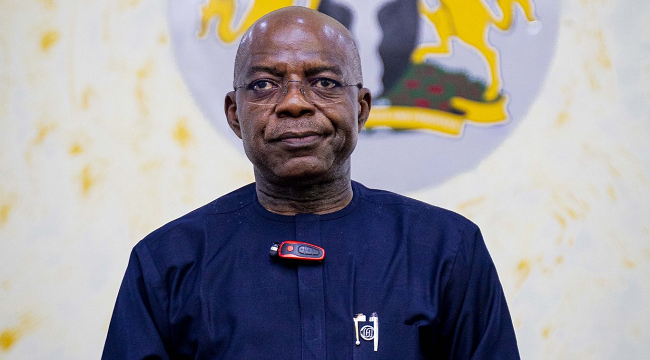
Demola Seriki served Nigeria as Minister of State for Defence and later as Ambassador to Spain. Since his death, his name has returned to public attention for a different reason: his wives are fighting over what he left behind.
The late Seriki’s third wife, Sholape Seriki, recently took to social media in tears, accusing her co-wife, Wosilat Seriki, of ignoring their late husband’s will and moving to control the entire estate.
Sholape claims property documents tied to assets meant for her children were altered after the ambassador’s death. Wosilat reportedly filed a court summons over a vehicle in Sholape’s possession, demanding either a public apology or a N50 million fine. Sholape also alleges her children’s school fees were deliberately withheld, that her children were physically attacked after visiting Wosilat’s home, and that she and her children were blocked from praying at their husband’s grave without prior permission.
Billionaire Femi Otedola, a close friend of the late diplomat, stepped in after Sholape’s social media posts spread widely. He gifted her and her children N50 million to cover immediate needs, including school fees.
The dispute follows a pattern that legal experts and sociologists have noted across Nigeria’s wealthiest households. When a patriarch who held multiple family factions together dies, the financial tensions that were managed quietly during his lifetime often surface immediately.
Similar battles have played out publicly after the deaths of Nollywood actor John Okafor, Access Bank CEO Herbert Wigwe, and Major General Abdullahi Muraina, whose 19 properties and vehicles had to be publicly frozen through newspaper notices to prevent unauthorised transactions.
In the Seriki case, one side has the courts. The other has social media. Both are being used as leverage in a fight that the man at the centre of it all can no longer resolve.