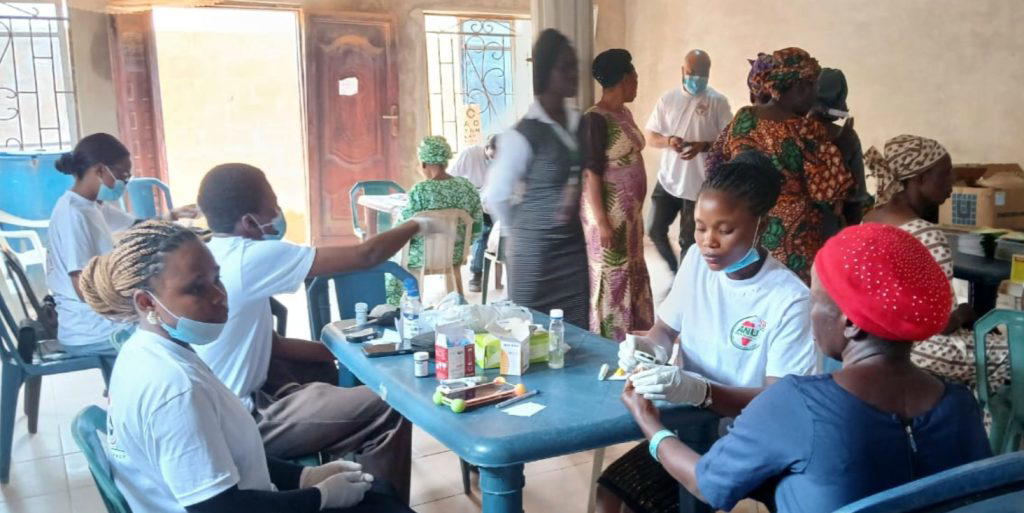
The Raw Materials Research and Development Council (RMRDC) has trained women and youths in Enugu State on Black Soldier Fly (BSF) farming as part of efforts to promote alternative sources of animal feed and create new livelihood opportunities.
The training exposed the participants to the fundamentals of Black Soldier Fly production, including breeding, feeding, harvesting, processing and the use of the larvae as a protein-rich ingredient in livestock and fish feed.
Black Soldier Fly larvae are increasingly being promoted as an alternative protein source because they can be produced in relatively small spaces and fed with organic waste. RMRDC has previously conducted practical training on BSF farming, describing the technology as a low-cost and sustainable approach that could help reduce dependence on conventional feed ingredients such as fishmeal and soybean.
The Council’s training initiatives are aimed at equipping entrepreneurs and small and medium-scale enterprises with practical skills that can improve productivity, reduce production costs and support local raw-material development.
In a welcome address at the two day capacity building workshop on Harnessing the Benefits of Black Soldier Fly (BSF) As An Alternative Protein Source in Livestock Feed and Other Value Added Products holding at Egede , Udi Local Government Area of Enugu, the Director-General, Raw Materials Research and Development Council, Prof. Nnanyelugo M. Ike-Muonso, said he was particularly delighted that the programme was taking place in Egede, their ancestral village and that its primary beneficiaries are rural women and young people, many of whom depend on subsistence farming for their livelihoods.
The RMRDC DG, who was represented by the Enugu State Coordinator of the council, Engr , Ude Henrietta stated that the training represents more than an academic or technical exercise.
He described It as an opportunity to introduce a practical technology that can transform what is commonly regarded as waste into protein, animal feed, agricultural inputs, employment and income.
“Another important aspect of this programme is the potential contribution of BSF to livestock-feed development. Feed is one of the major costs confronting livestock producers. Protein ingredients such as soybean meal and fishmeal are important components of many animal diets, but their availability and prices can affect the economics of livestock production.
” BSF larvae contain protein and lipids and have attracted increasing research interest as potential ingredients in poultry, fish and other animal feeds.As an institution mandated to promote the development and utilization of Nigeria’s raw materials for industrial growth and economic development, the RMRDC is constantly seeking ways to move our nation from a predominantly raw-material-producing economy towards a value-added and knowledge-driven industrial economy.
“Our philosophy is simple:Resources should not merely be extracted or produced; they should be developed, processed and converted into products that create jobs, generate income and support sustainable economic development.The Black Soldier Fly provides an excellent example of this philosophy.Organic residues from households, markets, agricultural activities and agro-processing operations are often regarded simply as waste. Through appropriate technology, however, some of these materials can serve as substr
“The timing of this training is particularly important.Our rural communities are confronted by several interconnected challenges, including poverty, unemployment, rising agricultural input costs, limited access to productive opportunities, inadequate value addition and environmental challenges.
“Our women and young people are particularly affected.At the same time, communities experiencing farmer–herder tensions face additional difficulties that can disrupt agricultural activities, markets and household livelihoods.We must, therefore, think beyond conventional agricultural interventions.We need innovative approaches that can help rural households diversify their sources of income and strengthen their economic resilience.This is where BSF technology becomes relevant.A BSF enterprise can potentially be established on a relatively small land footprint. It can be integrated with poultry, fish farming and crop production. Consequently, we see BSF as part of a broader strategy for rural livelihood diversification, women’s economic empowerment and youth enterprise development.Our women and youth are central to this initiative.Women and youth in this community are already actively involved in agricultural production, food processing, household management and local trade.We want to build on these existing capacities.Through this training, women and youth can acquire knowledge that can enable them to participate in:
Delivering a lecture on BLACK SOLDIER FLY (BSF) Farming, a Deputy Director heading the Bio Resources -Biodiversity Division of RMRDC, Saude Mohammed Hamza noted that the world is currently faced with unprecedented challenges of climate change, food insecurity, depletion of ocean resources and population growth (which is expected to reach 8.5 billion by 2030).
She added that one major problem from global increase in population remains the growing wastes generated which were estimated at 1.3 billion per day.
“Organic waste management has become one of the important issues in both the developing and developed countries due to the continuously growing population, urbanization, as well as changes in production and consumption. Due to the lack of technology and low-cost waste management systems in small countries waste management is not done effectively.
“According to UNICEF, malnutrition, particularly protein deficiency, is a significant issue affecting child growth in Nigeria. The country has the second highest burden of stunted children in the world, with a national prevalence rate of 32% among children under five” she state.
She therefore stressed that protein deficiency is not merely a statistic but a silent health crisis.
” According to nutrition experts, lack of adequate protein intake weakens immune systems, and diminish productivity in adults. In many Nigerian diets, starchy foods such as cassava, yam, rice, and maize dominate, while protein-rich foods like beef, chicken, fish, eggs, and legumes are consumed less frequently due to high costs or limited access.
“Insect proteins are good in essential amino acid content and protein digestibility hence they are promising solution to livestock feed. Furthermore, insects are cheaper alternative protein source as compared to fish meal and soy meal for animal feed. They contribute to high-quality and low-priced feed for livestock, poultry, and fish. They can be used as a live (fresh), dried and in paste form.
Participants in the Enugu programme are expected to apply the knowledge acquired to establish small-scale BSF farms and explore opportunities in the production of alternative animal feed.