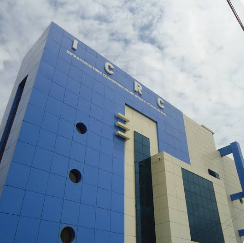
By Emma Ujah, Abuja Bureau Chief
The Director-General of the Infrastructure Concession Regulatory Commission (ICRC), Dr. Jobson Oseodion Ewalefoh, has urged West African countries to adopt Public-Private Partnerships (PPPs) as a key strategy for addressing the region’s infrastructure deficit.
Ewalefoh made the call at the recently concluded ECOWAS Infrastructure Forum in Abidjan, Côte d’Ivoire, according to a statement issued by the Commission.
He said governments across the sub-region no longer have the financial capacity to independently fund the roads, railways, housing, water and other critical infrastructure required to drive sustainable economic growth.
According to him, PPPs have become an indispensable alternative to traditional public procurement, enabling governments to partner with the private sector in financing, developing, operating and maintaining infrastructure.
He added that the model also provides access to private sector innovation, technical expertise and efficient risk-sharing mechanisms.
“As infrastructure needs continue to outpace public resources across the region, governments must create enabling environments that attract greater private sector participation through transparent regulatory frameworks and bankable projects,” he said.
Ewalefoh noted that, beyond government-initiated PPP projects, infrastructure development could also be accelerated through well-regulated unsolicited proposals from private investors.
He explained that unsolicited proposals allow investors to identify viable infrastructure opportunities, develop projects at their own cost and assume the associated risks, thereby reducing the financial burden on governments.
“An unsolicited proposal is complementary. We simply do not have enough public resources to develop every project through the solicited route. What we have done is to pragmatically transfer that responsibility and the associated risks of project development to the private sector,” he said.
He, however, stressed that unsolicited proposals were not intended to replace the conventional procurement process but to complement it, particularly where governments lack the resources to prepare projects.
The ICRC Director-General said Nigeria had strengthened its PPP framework by introducing clear eligibility criteria, structured governance procedures, the Swiss Challenge procurement method, non-refundable application fees and performance bonds.
He explained that these measures were designed to ensure that only credible and bankable unsolicited proposals advance through the transaction process.
Ewalefoh also called on development partners to invest more in project preparation, noting that while many institutions were willing to finance infrastructure, they were often reluctant to support the development of bankable projects.
“If everyone agrees that Africa lacks bankable projects, then we must ask why development partners are unwilling to invest in preparing those projects. That is precisely the gap unsolicited proposals help to fill,” he said.
He further advocated stronger collaboration among ECOWAS member states through a regional network of national PPP institutions to enhance technical capacity, promote knowledge sharing and harmonise best practices in project appraisal and implementation.
According to him, greater regional cooperation would also strengthen the credibility of PPP transactions by promoting common evaluation standards and improving information sharing on cross-border infrastructure projects.
The panel session featured representatives from Ghana, Senegal and Côte d’Ivoire, who shared their countries’ experiences in leveraging PPPs to accelerate infrastructure development.
Participants agreed that Public-Private Partnerships remain one of the most viable frameworks for mobilising private investment, closing West Africa’s infrastructure gap and promoting sustainable economic development across the sub-region.
Ewalefoh reaffirmed Nigeria’s commitment to strengthening its PPP ecosystem through transparent regulation, sound governance and innovative project development frameworks capable of attracting credible private investment into critical infrastructure in Nigeria and across West Africa.