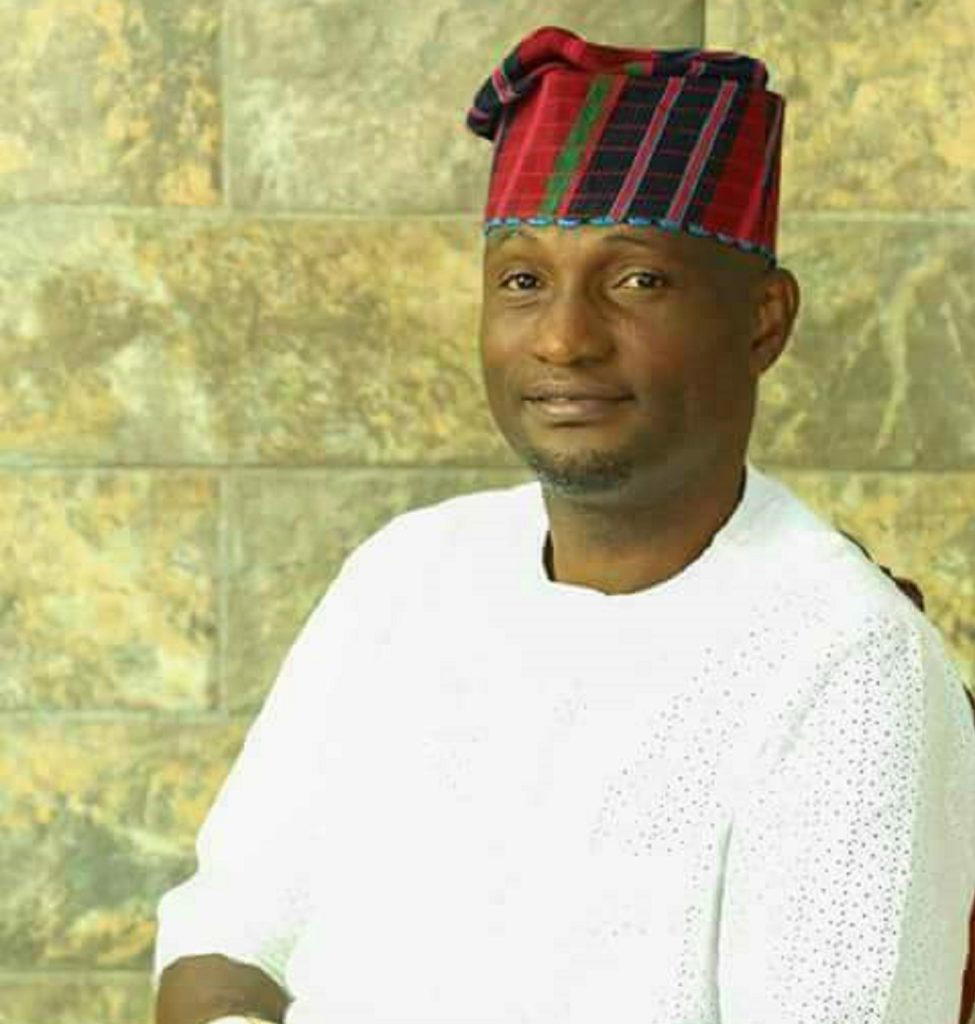
By Tunji Olaopa
The trajectory of democratic governance in Nigeria, from 1999 to date, calls for continuous reflective engagements from all quarters, not least from the Nigerian Political Science Association of Nigeria (NPSA). This is why the theme of its 35th Conference: “26 Years of Democracy in Nigeria: Reflections on Praxis and Challenges”, is most appropriate. NPSA is a very unique and significant stakeholder because it encompasses communities of practice and service dedicated to deep political reflection around the possibility of the Nigerian state. My contribution to this reflection around the practice of democracy in Nigeria since 1999 is simple: what is the cogent foundation around which democratic governance can be consolidated in a plural state like Nigeria?
I have raised this question because of my firm belief that we cannot even begin to understand the possibilities of democratic consolidation unless we have a clear path towards a national consciousness of the type of nation Nigeria can and should be. And in charting that clear path, there is the need not only for the politicians but also the political scientists to constitute a community of thinkers with a sense of what a political community like Nigeria requires to make progress on its national ideals. The agenda is fundamental: what ideological basis ought to form the foundation of the type of politics that Nigerian political class deploys for governance purposes? This is a very crucial question as the Nigerian polity begins heating for the 2027 general elections. Governance at the moment is very far from being good in a significant sense. And the blame is no one’s. And yet, while the politicians are concerned with the goal of achieving or retaining political power, it is the responsibility of the intellectuals to push the boundaries beyond the self-serving aspirations of politicians.
This is the basis of the elite nationalism that I have been advocating in several op-ed pieces. The idea is significant because it reiterates the significance of the elite vanguard in the making; in the rise and fall of civilizations and prosperous polities. Scholars—from Acemoglu and Robinson in Why Nations Fail to Herbst and Mills’ Africa’s Third Liberation—have all pointed at the role of the elite in the fashioning of inclusive and participatory institutions that activate economic growth and national progress. To elevate their states into a governance paradise, political elite must inescapably, in a manner of speaking, first commit a class suicide in a measure that will transform their understanding of what politics means as the mechanism for mediating the social contract that binds them to the people. And it is only after this thoughtful suicidal move, as patriotism—that separates them from the rest of the rapacious and accumulative political class—that they can then take a gamble on development, to take the apt title of Stefan Dercon’s book, Gambling on Development. Gambling on development is to take a risk with good politics and good governance; it is to deliberately pull all efforts—in alignment with other elites, intellectual and administrative—to build a developmental state that will be the arrowhead of the government’s good politics to lift citizens into well-being.
It is this kind of political gambling—and elite nationalist vision—that gives the world the unique figure and vision of leaders from Lee Kuan Yew of Singapore to Paul Kagame of Rwanda. From the Asian Tigers to Japan and India, we have states and their leaderships which deliberately crafted policy that enabled them to smartly navigate the traps of neo-liberal capitalist agenda that strangles many states across the globe, especially the African ones. China, like post-war Japan and India, is very unique in its ideological choice of a state-controlled capitalism that blends central planning with a market-driven entrepreneurial ideology that has been the basis of massive infrastructural development. India’s example is close to that of many African states like Nigeria, and its courageous negotiation with the IMF and its conditionalities constitutes a template by which many African states could make sense of an economic future outside of the gaze of neoliberal capitalism. India pursued a gradualist path that enabled it to negotiate an agreement for paying off its debts and fully disengaging from all loan obligations since 2003.
The Awolowo-Dudley Discourse: This background, I argue, set the basis for understanding the intellectual and ideological lenses through which Chief Obafemi Awolowo and Professor Billy Dudley articulated critical but intersecting frameworks by which the Nigerian state could move towards nationhood in the manner of, say, Singapore. We all would agree that Awolowo is one of Nigeria’s most cerebral politicians, one who gave his entire intellectual talent to the task of articulating an ideological and political direction for Nigeria’s development. Awolowo’s activities as a politician, from his premiership of the western region to the leadership of the Action Group and the Unity Party of Nigeria, are just to be understood as the practical dimension of his intellectual advocacy for a stable and prosperous Nigerian state. And his recipe for the Nigerian state is founded on four critical theoretical and practical elements: federalism, socialism, democracy and mental magnitude.
In Thoughts on Nigerian Constitution, he went to a great and detailed length to establish scientific and systematic proof, founded on Nigeria’s amalgamated realities, that a federal constitution is what is suited for Nigeria’s multilingual and multinational status. In The People’s Republic, Awolowo expanded his argument in support of his choice of socialism as a complement to a federal constitution. A socialist rather than a capitalist government must facilitate three fundamental operations on which the welfare of her citizens rest: “(i) security from internal disorder and protection against external aggression; (ii) adequate provision of the necessaries of life, together with some comforts, and if possible a little bit of luxury as well; and (iii) the enjoyment of freedom, justice, equality, and other fundamental human rights.” Awolowo’s democratic socialist government therefore must be established around two ultimate goals, economic freedom and national development. And to attain these two goals, a democratic socialist Nigeria must pursue specific social objectives: (a) free education, (b) free healthcare facilities, (c) full employment of its human resources, (d) “self-sufficient in non-durable consumer goods”; (e) “produce enough to raise the level of consumption as well as the standard of living for all the citizens”.
Prof. Dudley’s critical intervention intersected and interrogated Awolowo’s detailed ideological framework at several points. The first is the almost axiomatic choice of what Dudley calls the “Wheare model” of federalism which, according to him, was not satisfactory or automatic. The arguments that led to the choice, according to Dudley, “appeal to the sociological complexity of Nigerian society—its ethnic and geographic diversity—and the nature of the political parties; to dissatisfaction with the constitutional arrangements of the pre-1954 situation which supposedly gave power without any accompanying responsibility to the Nigerian Ministers; and to a fundamental disagreement between the political leaders over the pace of political advance and the date for self-government.” Dudley insisted that the appeal to Nigeria’s ethnic and multinational composition can only justify the need for some form of federal arrangements, and not the specific model that Awolowo and some others were in love with. And what is more, the second explanation could have received some ‘administrative-political decision” that needed not have disrupted the pre-1954 administrative structures. This is the kind of sceptical engagement that Dudley brought to bear on the ideological posturing of Awolowo and others about the nature and possibilities of the postcolonial Nigerian state.
Indeed, we could argue that Dudley represents a calming and sceptical force—that the political science community stands for—that critically attends to the acts of the politicians, including their ideological and non-ideological politicking. In this case, Dudley served to interrogate Awolowo’s ideological iteration of what it means for Nigeria to become a developmental state that responds to the yearnings of her citizens. For Dudley, that transitioning is not automatic; it has to be done with lots of caveats and variables in mind, the least of which is not the unique circumstances of postcolonial Nigeria and the political and non-political forces that are contending for her soul. In other words, how can we iterate, for example, Awolowo’s democratic socialism as a model of developmental state without compromising a few of the constituent democratic or socialist principles? How do we model Nigeria on Lee Kuan Yew’s Singapore without adopting a few embedded authoritarian principles? How do these authoritarian principles square with Awolowo’s vision of a good state? Is a state becoming and being a democratic socialist state sufficient to enable the kind of negotiation that India facilitated with the Bretton Woods institutions and their conditionalities?
These are critical nuances that call on the discipline of political science and on political scientists to reflect on and rethink their profession, especially in relation to what will serve the upcoming generations of political scientists desirous of making professional sense of the discipline; while being expert solution provider in resolving the critical postcolonial condition of the Nigerian state. There is also the concern regarding how the political science community could activate all its theoretical, methodological and disciplinary arsenals to keep attending to the existing and unfolding circumstances of the Nigerian political community as a fundamental disciplinary task. Like many disciplines in the contemporary world today, the fear of silo mentality and ivory tower isolation is always real. This is compounded by an increasing hyper-specialization that makes a discipline like political science increasingly alienated from the idea of politics and the political as they affect millions of ordinary Nigerians who are struggling with insecurity, poverty, looming starvation, unemployment and myriads of existential challenges. These Nigerians do not understand or care for such evidences of the discipline’s growing sophistication and nuancing as retrospective voting, measurement error, game theory, computational political analysis, political polarization, ideal types and ideal points, motivated reasoning, policy diffusion, framing, prosocial behavior, protectionism, transitional justice, etc.
Thus, the more sophisticated political science methodology has become, especially in being data-driven and theoretically rigorous in deepening scholarly analyses for more nuanced micro- and macro-level understanding of complex political issues, the more it keeps widening the relevance and expectation gaps. These gaps affect not only the chance at transdisciplinarity for political science, but more significantly—as an implication—the capacity of the discipline to positively and critically contribute to practical governance and public policy issues that require mediating the town-gown distance as a mean of integrating the discipline into real-world political, governance and policy situations.
This calls for an intentional disciplinary gatekeeping from the political science community of practice. I highlight three critical level the gatekeeping must necessarily address. One, there is the need to urgently rebrand discipline in ways that makes its scholarship more public-facing in a measure that makes it accessible for engagements with politicians, policymakers and other relevant stakeholders. This must necessarily transcend the usual town-and-gown partnerships to even deeper and critical connections that enable the co-production of political and policy knowledge. It enables the political science community of practice to engage in collaborations with civil society organizations, grassroots movements, NGOs and other nonstate actors in designing research frameworks and curricula contents for a hared understanding of the status and direction that give the discipline relevance and legitimacy.
Two, there is a momentum gaining on why the political science curriculum and pedagogical frameworks needs to adapt to current and significant realities, like artificial intelligence. AI today is increasingly challenging the way we conceive of research, pedagogy and the implications of research for praxis. There is also the further challenge of reflecting on how the curriculum and pedagogy enable political science students and graduates’ transit from theoretical instructions to work-integrated learning. This demands that the current curriculum must embed applied and real-world skills and competences that equip graduates to transit, with as little difficulties as possible, into public service, NGOs, think tanks, political consulting and the private sector. This will mean opening up pedagogies to innovation like internships, scenario-based teaching, model and multidisciplinary case studies, and service-level learning that provide students with direct hands-on learning and exposure to workforce and workplace dynamics.
These are the critical challenges that NPSA will have to mediate in the long drive towards making the discipline more relevant, more accessible for understanding and mediating the postcolonial predicaments of the Nigerian state.
*Being the address delivered by Prof. Tunji Olaopa, Chairman of the Federal Civil Service Commission, as chairman of the opening ceremony at the 35th Conference of the Nigerian Political Science Association (NPSA) held at the University of Ibadan on June 10-11, 2026