By Sola Ogundipe
The Director-General of the National Agency for the Control of AIDS (NACA), Dr. Temitope Ilori, has cautioned Nigerians against HIV cure claims, stressing that modern treatment can only suppress the virus to undetectable levels and enable people living with HIV to live long, healthy lives.
Ilori, who spoke during a media training on HIV Pre-exposure Prophylaxis (PrEP) and other prevention strategies, said people who test positive to HIV should commence antiretroviral (ARV) treatment promptly and remain on medication.
At the event held in collaboration with the Federal Ministry of Health and Social Welfare, and the World Health Organisation (WHO), she said effective treatment has transformed HIV from an infection of certain death into a manageable condition.
“Early diagnosis and treatment can prevent HIV from progressing to AIDS, people who remain on effective treatment can maintain healthy immune systems, but feeling healthy after stopping medication does not mean the virus has disappeared,” she stated.
Expressing concern over people who abandon ARV therapy after told they have been cured and advised to stop taking their drugs, she said “There is no cure for HIV, as of today; some people have proposed that they have cures, but science says otherwise, those claims have not been tested.
“To the best of my knowledge, it has not been documented scientifically that somebody was cured. If you are living with HIV and someone tells you that you have been healed, don’t stop your medication.,” she asserted.
Further, Ilori said consistent treatment can reduce the amount of HIV in the blood to undetectable levels.
“While ARV therapy can suppress HIV effectively, there is no cure for HIV as of today. An HIV diagnosis is no longer a death sentence, but it is not the same thing as being cured.
“For now, science offers something highly effective but different from a cure – treatment that can suppress HIV to undetectable levels, protect the immune system and prevent sexual transmission,” she noted.
“People on treatment are not supposed to stop their medication, the drugs are effective and, when taken consistently, can suppress the virus to undetectable levels. Suppressed such that by the time you go for your six month appointment, many times the virus is almost undetected, and that’s where the expression “undetectable equals untransmittable” comes from.
“Undetectable equals untransmittable,” she said, explaining that people living with HIV who achieve and maintain an undetectable viral load through effective treatment do not sexually transmit the virus.
She said the development has also made it possible for HIV-positive and HIV-negative couples to have normal relationships and biological children without transmitting HIV, provided the partner living with HIV remains on effective treatment and maintains viral suppression.
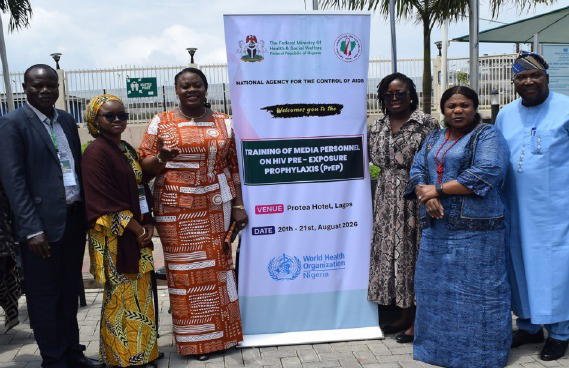
The NACA boss said people should not abandon medically prescribed treatment based on unverified claims of healing even as she admonished the media to help tackle misinformation and stigma surrounding HIV, particularly false claims about cures and misconceptions about how the virus is transmitted.
Highlighting the growing role of HIV prevention technologies, Ilori stressed said “Pre-exposure prophylaxis (PrEP) provides HIV-negative people at substantial risk of infection with an additional layer of protection. Options include daily oral PrEP and long-acting injectable PrEP. Nigeria has introduced newer long-acting prevention options, including cabotevir and Lenacapavir, a twice-yearly injectable HIV prevention option.
She also urged Nigerians to use condoms, know their HIV status, get tested and seek immediate treatment where necessary.
The NACA boss said misinformation remains a major obstacle to HIV control, with some people still believing that HIV can be transmitted through hugging, shaking hands, sharing food or drinks, or mosquito bites. She said such misconceptions fuel stigma and discrimination against people living with HIV.
Ilori said Nigeria’s HIV response had made significant progress but warned that the country must sustain prevention, testing and treatment efforts if it is to achieve epidemic control.
She said the focus must now be on ensuring that people know their HIV status, those who test positive commence treatment and remain on it, while those at substantial risk have access to appropriate prevention tools.
The challenge, Ilori said, is ensuring that Nigerians have accurate information and continue treatment long enough to benefit from those advances.
Three PrEP options used for HIV prevention in the country include, the daily oral PrEP which is a tablet taken every day, the “Event driven” or “2+1+1” PrEP taken around sexual activity rather than every day, and the long acting injectable PrEP, Cabotegravir (CAB-LA) given at two month intervals, and the recently introduced long acting injectable Lenacapavir (LEN) administered twice a year.