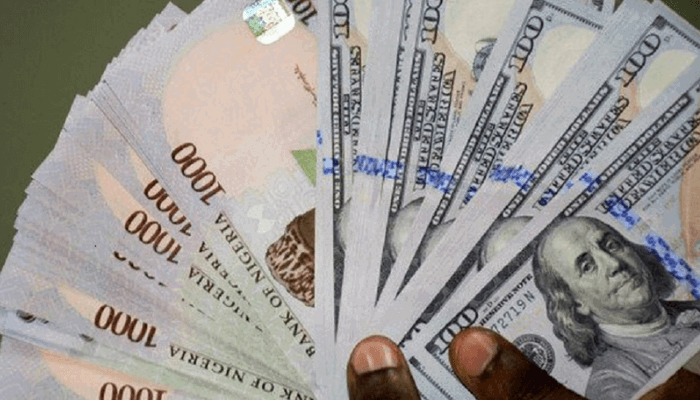
The Naira opened the trading week stronger on Monday, appreciating by N1.92 against the United States dollar at the official foreign exchange market.
Data published on the Central Bank of Nigeria’s official website showed the currency closed at N1,368.26 per dollar on Monday.
The latest performance represented a 0.14 per cent appreciation compared with Friday’s official closing rate of N1,370.19 per dollar.
The gain, though modest, extended the domestic currency’s positive run recorded throughout the previous trading week.
The Naira traded at N1,383.62 to the dollar on Monday, June 29, marking the week’s opening official exchange rate.
The local currency strengthened further on Tuesday, June 30, closing at N1,379.68 against the dollar in the official market.
Momentum continued on Wednesday, July 1, with the exchange rate improving to N1,372.40 per dollar.
The currency maintained its upward trajectory on Thursday, July 2, closing at N1,370.15 against the dollar.
The official market ended the week positively on Friday, July 3, with the Naira strengthening slightly to N1,370.19 per dollar.
Monday’s appreciation reinforced the currency’s relative stability witnessed in recent months under ongoing monetary and foreign exchange reforms.
Market analysts linked the sustained improvement to stronger foreign exchange liquidity across the official market.
They also cited improved investor confidence, which has supported demand and supply conditions in the foreign exchange market.
According to analysts, sustained policy measures introduced by the Central Bank of Nigeria have continued strengthening market transparency and price discovery.
“The recent appreciation reflects improving foreign exchange liquidity and increased confidence in the official market.
“The consistency of recent gains suggests that current monetary and foreign exchange reforms are beginning to deliver greater exchange rate stability,” analyst said.
Economic observers, however, noted that sustaining the positive trend would depend on continued foreign exchange inflows and disciplined implementation of existing monetary policies.
They also stressed the importance of maintaining investor confidence and expanding foreign currency earnings to support the Naira’s longer-term stability.
(NAN)