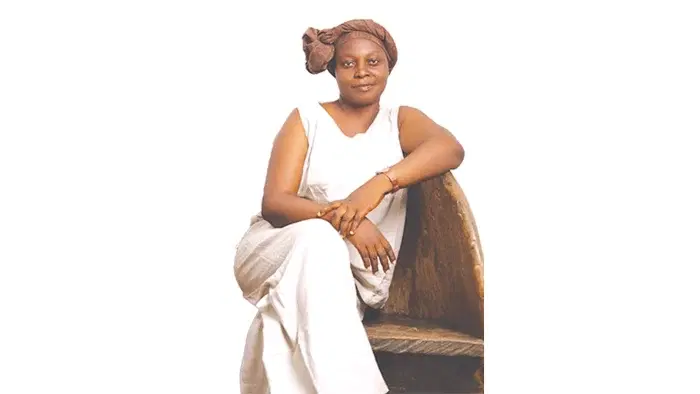
By Ebunoluwa Sessou
With her 50-hectare farm in Kakun, Kogi State, Mrs. Folashade Ayeni has emerged as one of Nigeria’s leading agripreneurs and advocates for food security. As the Chief Executive Officer of Babaeko Farms, she has dedicated years to combating hunger and poverty through large-scale oil palm cultivation and community-based agricultural development.
Beyond her farming enterprise, Ayeni recently assumed leadership as Chairman of the Durotoluwa Multipurpose Cooperative Society in Kabba/Bunu Local Government Area of Kogi State, where she is helping smallholder farmers gain access to resources, markets, and opportunities for growth. In this interview, she speaks about her journey, the role of oil palm in addressing food insecurity, lessons from Zambia, and the future of agriculture in Nigeria. Excerpts:
What inspired your commitment to agriculture and food security?
My passion for agriculture comes from a desire to fight hunger and poverty in Nigeria. Despite the challenges facing the agricultural sector, I remain committed to contributing to food security. Agriculture has the power to transform communities, create jobs, and improve livelihoods. For me, farming is not just a business; it is a mission to ensure that more Nigerians have access to food and economic opportunities.
Why did you choose oil palm cultivation as your primary focus?
Oil palm offers enormous potential for Nigeria. Our country was once the largest producer of palm oil in the world, but today we import a significant portion of what we consume. Through Babaeko Farms, my goal is to produce palm oil on a large scale and help bridge the gap between local demand and production. Every hectare of oil palm cultivated contributes to reducing imports and strengthening our agricultural economy.
Tell us about Babaeko Farms and its role in addressing food insecurity.
Babaeko Farms is a mixed-crop enterprise with oil palm as its cornerstone. We are focused on sustainable production and increasing agricultural output. By expanding cultivation and improving productivity, we contribute to food availability while creating employment opportunities for people within our communities. Our work demonstrates that agriculture can be both profitable and impactful.
You were recently elected Chairman of the Durotoluwa Multipurpose Cooperative Society. What does this position mean to you?
It is a responsibility I take seriously. Cooperatives play a critical role in rural agriculture. They enable farmers to pool resources, access quality inputs, negotiate better prices, and share knowledge. When cooperatives function effectively, entire communities benefit. My aim is to strengthen the cooperative, improve farmers’ productivity, and create more opportunities for economic growth.
Women play a major role in agriculture. What are your thoughts on female participation and leadership in the sector?
Women are the backbone of agriculture in many communities. They plant, weed, process, and market agricultural products, yet they often have limited access to land, finance, and decision-making positions. This is not only unfair but also detrimental to national food security. Empowering women farmers is essential if Nigeria is to meet the food needs of its growing population. I hope my leadership encourages more women and young girls to see agriculture as a viable path to success.
Earlier this year, you visited Zambia to study agricultural practices. What lessons did you bring back?
The experience was very enlightening. I visited several farms and observed practical systems that improve productivity. Some of the key lessons included effective irrigation systems that reduce dependence on rainfall, well-managed cooperatives with proper record-keeping, aggregation centres that connect farmers directly with processors, and mechanisation that significantly increases output. What impressed me most was that these achievements were not based on miracles but on organisation, investment, and consistency.
Can these agricultural models work in Kogi State?
Absolutely. Kogi State possesses the land, water resources, and climate needed for crops such as oil palm, cassava, maize, and rice. What is required is the deliberate adoption of proven best practices and stronger support for farmers. With the right investments and commitment, Kogi can become a leading agricultural hub and even surpass some of the successes we observed elsewhere.
Why do you often say that food security is national security?
A nation that cannot feed itself is vulnerable. Food security affects economic stability, public welfare, and national development. Every farm that increases production and every cooperative that improves farmers’ livelihoods contributes to strengthening the country’s resilience. Agriculture should be viewed as a strategic sector, not just an economic activity.
What message do you have for government and policymakers?
Ayeni: Government at all levels should recognise women farmers as strategic assets. Farmers need access to land, affordable credit, quality inputs, and extension services. Support should be practical and measurable. When farmers receive the tools they need, they can deliver results that benefit the entire nation.
What opportunities do you see for investors in agriculture?
The opportunities are significant, particularly in the oil palm value chain. Nigeria has a large market and a substantial supply gap. Investors should see this as an opportunity to partner with farmers, develop processing facilities, and strengthen agricultural infrastructure. There is strong potential for both profitability and impact.
What advice would you give to young Nigerians, especially young women, considering a career in agriculture?
Agriculture is no longer a fallback option. It is a frontier of opportunity. Young people should embrace innovation, acquire knowledge, and take advantage of the vast opportunities available across the agricultural value chain. Success requires hard work and patience, but the rewards can be transformative.
Looking back on your journey, what has been the driving force behind your work?
I have never waited for the system to fix itself. I believe in taking action. I planted, organised, learned from others, and returned home determined to apply those lessons. If we are serious about addressing hunger and poverty, we must move beyond discussions and focus on practical solutions. That is the approach I have chosen, and I hope others will do the same. My journey reflects the growing influence of women in agriculture and the critical role of agribusiness in addressing Nigeria’s food security challenges. Through Babaeko Farms, cooperative leadership, and a commitment to continuous learning, I am helping to build a model for sustainable agricultural development, one that could be replicated across farming communities nationwide.