Iran’s top negotiator on Sunday threatened a more forceful response to any further US attacks after Tehran targeted American warships in their latest round of clashes.
The exchanges of fire, which began with US raids last week, come amid a deadlock in the six-month war between the two foes.
Iran has maintained its stranglehold on the strategic Strait of Hormuz while Washington continues a counter-blockade of Iranian ports.
Washington is also seeking to choke Iran’s economy, rolling out sanctions on entities with financial links to the Islamic republic in a bid to force it into submission.
Iranian parliament speaker Mohammad Bagher Ghalibaf, who has acted as chief negotiator in talks to end the war, said Sunday that “the era of proportionate responses has come to an end”.
“Any aggression against Iran’s interests and security will receive a faster, more intense and more painful response,” he added, in a speech carried by state media.
Tehran’s top security chief, meanwhile, said Iran would establish a “prohibited zone” near the Strait of Hormuz in coming days.
“This zone will start from the US Navy’s blockade line and include areas of the Persian Gulf. Any ship entering this new zone will be placed on the sanctions list” of Iran, Mohsen Rezaei told state TV.
– Vessels targeted –
On Saturday, US Central Command (CENTCOM), which oversees American military operations in the region, said Iran had unsuccessfully fired at two American warships — an aircraft carrier and a destroyer.
In response, the US struck three oil tankers it said were linked to Iran’s Revolutionary Guards (IRGC).
Video posted by the military showed large fireballs and billowing flames after projectiles slammed into the ships.
The three vessels were “part of a multibillion-dollar shadow network that funds the IRGC and its regional proxies”, CENTCOM said.
Iran quickly retaliated, with the Guards saying their naval forces “targeted three oil tankers on the unauthorised route of the Strait of Hormuz and three vessels affiliated with the child-killing America in other areas”.
It warned ships not to attempt to transit the key trade waterway via routes not approved by Tehran.
Early on Sunday Iran’s Guards also said they attacked a US naval drone trying to enter the strait, according to a statement carried by state television.
CENTCOM spokesman Captain Tim Hawkins, however, called the claim “a complete lie”.
– ‘Clinging on to power’ –
CENTCOM commander Admiral Brad Cooper had said after the exchange of strikes: “If you shoot at two of our ships, we will impose an even higher economic cost — taking out three of yours.”
The Iranian foreign ministry condemned the attacks on its oil tankers as “illegal and aggressive actions”.
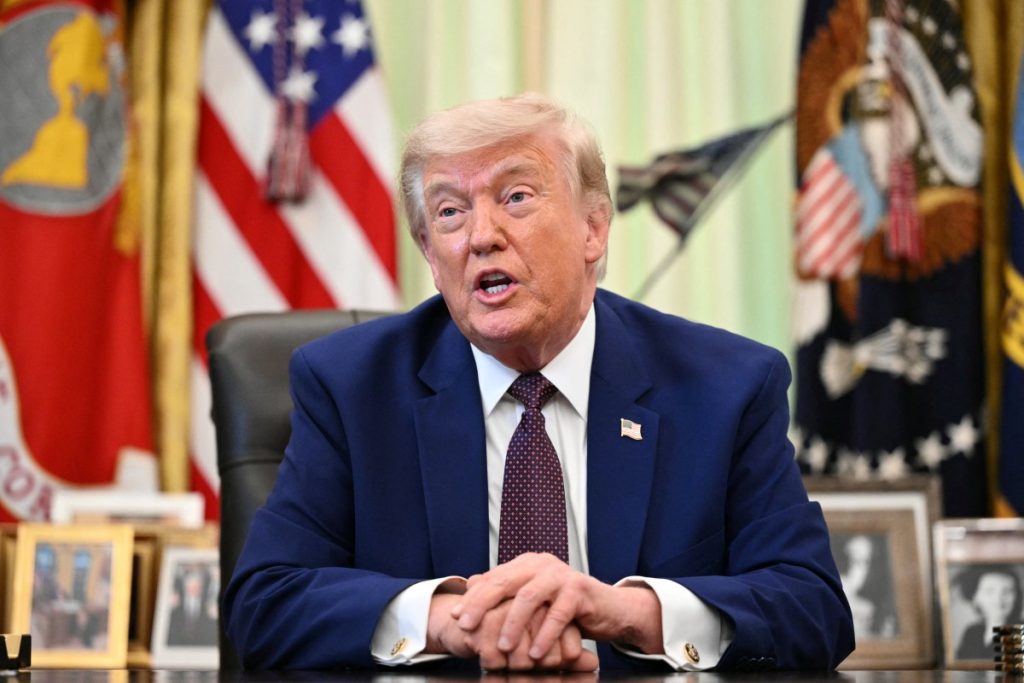
The administration of US President Donald Trump has tried to downplay the significance of the six-month conflict, which has proven increasingly unpopular at home as midterm elections near.
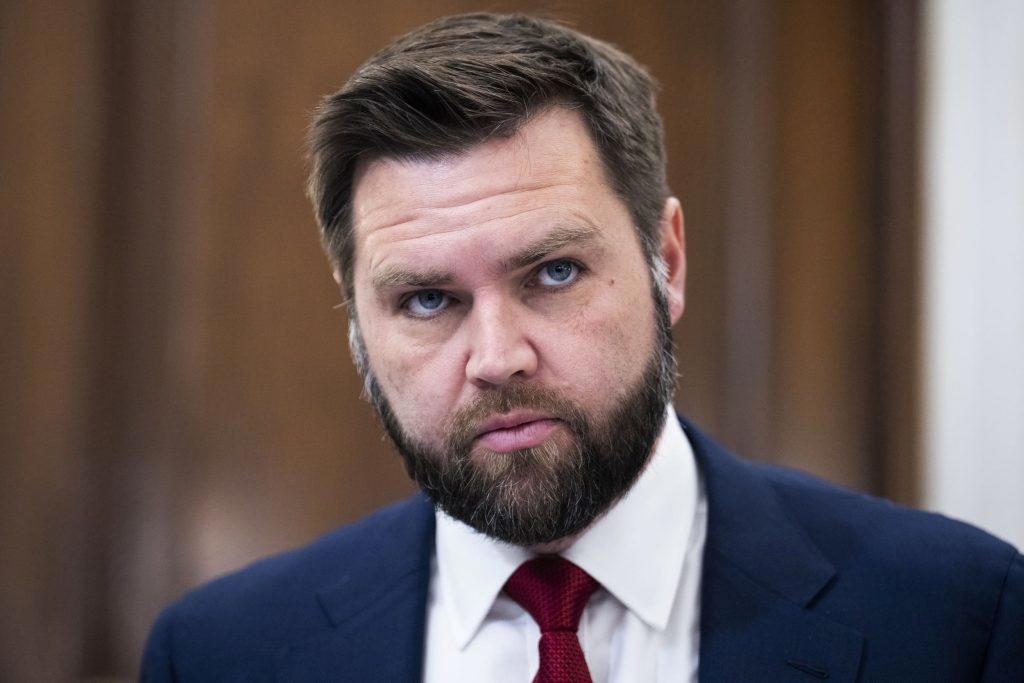
US Vice President JD Vance has gone so far as to say that he “wouldn’t call it a war”.
Trump reiterated that view on Friday, calling the war “small potatoes” for Washington.
Iranian officials have maintained their defiant tone, but US Energy Secretary Chris Wright told ABC’s “This Week” programme on Sunday that Iran was “doing everything they can to cling on to something”.
“They know their nuclear programme’s coming to an end. Their navy has come to an end. Their air force has come to an end. They’re clinging on to power,” he said.
A fragile ceasefire between the two sides collapsed in July after attacks on commercial ships in the Hormuz strait, through which one-fifth of world oil supplies previously flowed.
Trump has in recent weeks repeatedly threatened to claim sovereignty over the strait, even posting a map showing it as “new US territory”.
Vance has insisted the US will not reopen talks with Iran until it ends attacks on commercial shipping in the strait.