The purpose of this series is to explain why the young people of Igbo extraction now reject the offer to join the Nigerian Army. In the first part, we saw how the Army that Igbo senior officers once led with distinction became the instrument for their subjugation, both during and long after the Biafra War, despite promises to the contrary. In the second part, we also saw how the military, as a political force, was used to prevent the Igbo resumption of their pride of place, not only in the political power arena but also in virtually every sector of Nigeria’s affairs. Each time the Igbo are poised to lead the country, the Establishment uses the Nigerian Army to stop them in preference for less-fancied options, which is why the country is dying, not growing. The straw that finally broke the camel’s back was the return of Muhammadu Buhari in 2015 as an elected president. Ndi Igbo had wholeheartedly thrown their support behind Dr Goodluck Jonathan in the 2011 presidential election. Jonathan obtained victory despite withering opposition from the North and South West, and he identified Ndi Igbo as the great, avuncular force behind his victory. He appointed Igbo sons and daughters into commanding positions in his government, giving them posts that had always been denied them by the military and its civilian agents. These included Secretary to the Government of the Federation. Jonathan even mandated Ndi Igbo to nominate a candidate of their choice.
He also brought back Dr Ngozi Okonjo-Iweala to serve as Minister of Finance and Coordinating Minister for the Economy. She commanded the power of a virtual Prime Minister and helped build the Nigerian economy to emerge as the largest in Africa in 2014 after a strategic rebasing, with a GDP value of $509.9bn. By contrast, our economy has currently slid to the third position, behind South Africa and Egypt, with a GDP value of $386.67bn, according to many authoritative sources, including Business Insider Africa. It was also during that era that Nigeria stood on the threshold of defeating Boko Haram, with the Nigerian Army under the supreme command of Igbo-born Chief of Army Staff, Lt-Gen Azubuike Ihejirika. The North and South West plotted the defeat of Jonathan in his re-election bid in 2015. Ndi Igbo felt the pain of Jonathan’s loss as if he were their ethnic kinsman. They were also made to pay for their support of him by the new All Progressives Congress (APC), whose candidate, Muhammadu Buhari, emerged victorious. Glowing in his victory, Buhari went to America, apparently to thank President Barack Obama for his support after three previous failures. At the US Institute of Peace on 25th July 2015 in Washington, DC, Buhari uttered a grossly irresponsible undertaking: that he would give his supporters 97 per cent and only 5 per cent to those who did not support him. To show he meant it, he loaded his cabinet’s juiciest positions and the military’s high commands with mostly Northern Muslims, with generous concessions to his South West partners.
He thus drove the Igbo nation, especially the youth, into the waiting hands of the Mazi Nnamdi Kanu-led Indigenous People of Biafra (IPOB). Before Buhari’s unpatriotic utterance, the incendiary separatist broadcasts of Mazi Kanu, who had established Radio Biafra in London back in 2009, were generally ignored by most Igbo audiences, including this writer. He came strongly into the picture when he capitalised on the move for Brexit referendums to enable Britain to leave the European Union. Kanu argued that Nigeria’s amalgamation had expired in 2014, and that referendums should be staged to enable its indigenous people decide democratically and peacefully whether to stay on in Nigeria. He was very convinced that the people of the East, especially Ndi Igbo, would overwhelmingly vote for Biafra’s actualisation.
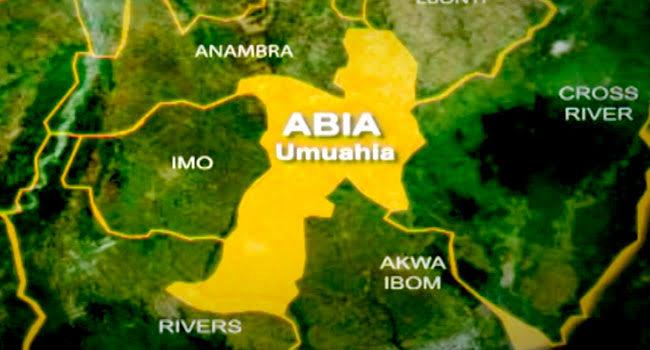
After Buhari’s hate declaration and subsequent hate actions to sideline Igbo people, Kanu’s messages started sounding like music, and many flocked to him. The Biafra agitation drew heavy traction, as youths joined the Biafra independence protests, leading to the proscription of IPOB and Kanu’s arrest and trial. Buhari used the Army, Police and security agencies to kill, harass, intimidate, arrest, detain and dehumanise Igbo youth and devastate communities suspected to be IPOB bases, especially in Abia, Imo and Anambra States. Worst of all, his regime funded armed Fulani herdsmen to set up ruga in no fewer than 350 forest bases in the South East alone. This was a strategic part of his evil Islamisation and Fulanisation agenda, with the military and security forces used to protect them. This led Kanu, who had escaped into exile, to establish the Eastern Security Network (ESN), specifically to protect Igboland from Fulani expansionism.
Till today, under President Bola Tinubu’s watch, IPOB and ESN remain proscribed, Kanu is in jail in Sokoto, and the Nigerian Army is sinisterly deployed in the South East. The Monday Sit-At-Home is passive resistance to protest Kanu’s unjust imprisonment and the siege of Igboland by the Nigerian Army. Igbo youth see the Nigerian Army as an oppressive, occupying force deployed to grease the wheel for armed Fulani conquest of their land. Secondly, the federal government’s suspicious handling of the war against terrorism (Boko Haram, bandits, ISWAP, Fulani herdsmen militias) and unconcerned attitude to Christian genocides aren’t helpful. Also, the unconfirmed general perception that “repented” Boko Haram terrorists are absorbed into the forces and sent to the East to kill people remains rife. The use of military and police checkpoints to harass and extort people in the South East is at a level not found anywhere else in the country.
Joining the military is the duty of all patriotic youths. But this is impossible when the armed forces are seen as oppressors; weapons fashioned against a particular ethnic group for no reason other than blind hatred and extreme bigotry.
CONCLUDED.