By Egufe Yafugborhi
For 72 hours, progress froze on Imoniyamen Street. What was meant to be a celebratory kickoff for a long-awaited Delta State government road contract in Iwhrekpokpor, an Ughelli North suburb, turned into a standoff between community leadership and the project contractor.
At the centre of it is the appointment of a Community Liaison Officer, CLO. The dispute stalled equipment, drove up costs, and exposed what residents now describe as a gap in state contract oversight. It also produced an unlikely hero, a resident who refused to look away.
Equipment in, work shut down
Trouble began on June 25, when the contractor mobilised equipment to the Imoniyamen Road site in Iwhrekpokpor. Within hours, an unnamed community President-General ordered work shut down.
His reason: Opposition to Edafe Odiete, the CLO appointed to manage contractor-community relations. The shutdown halted man-hours and, according to project sources, triggered immediate increases in operational costs.
Police at the gate
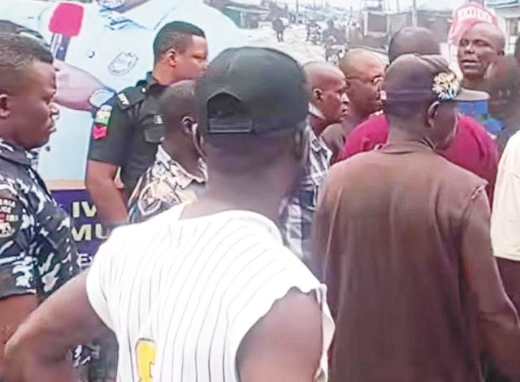
The standoff escalated. The PG returned with police officers to the site, seeking to arrest Odiete and operations personnel.
Social justice advocate, Kenny Ovweh, who was at the scene, captured the tension live: “The PG and his executives have brought police to disrupt the work. They say the work should stop, that they want to make arrests. Nobody is intimidated. The youths have refused to allow any arrest. Nobody is going anywhere.”
Silence from Asaba
As the disruption dragged on, one institution remained quiet; the Delta State Government, which awarded the contract. No official intervened and no statement was issued.
Officials contacted for comment asked for “time to look into the issue.” No feedback followed. The silence left residents, the contractor, and workers exposed, raising questions about supervision and monitoring in the state’s contract management chain.
Even the State Police Command offered no clarity on its officers’ alleged arrest mission at the project site.
Enter a hero
With the government silent, Ovweh took matters into his own hands. For three days, he used his social media platforms to hold all parties accountable.
“Residents have endured years of suffering on this road due to neglect by successive administrations,” Ovweh said. “They are not prepared to accept any disruption to Governor Sheriff Oborevwori’s commitment to fix the road.”
The pushback came at a cost. “Some accused me of taking sides, as if I had a personal interest. Thank God I was vindicated. I meant well,” he said.
Truce at last
By day three, the tension eased. Speaking for the PG, Iwhrekpokpor Community Taskforce Chairman, Gandoki Julius announced a resolution. “We had issues over the CLO,” Gandoki said. “But we have verified that his certificate is from Asaba. The community has now agreed to work with him so we can get results on the project.
“We don’t need violence, protest, or bloodshed. We need peace so this road can be completed for the common good. We will work with Edafe Odiete, the CLO. He is a son of the soil.”
Credit for holding all accountable
Residents credited Ovweh for keeping pressure on all sides. Festus Mukoro, a tailor who lives in the area, said: “But for this man who exposed the attempts to disrupt work, something ugly could have happened.
“Despite threats and blackmail, he was fearless. He held everyone accountable. In the end, the community EXCO saw the futility of their actions and backed down.”
For Ovweh, there are no hard feelings. “It was never personal. I felt the frustration of residents who were upset that those who should have championed a peaceful execution of this project were the ones disrupting it.”
What’s next for Imoniyamen
Work has resumed and the CLO remains. The community says it wants peace and completion. But the three-day disruption leaves a mark, a government project nearly derailed by internal politics, and saved only when a citizen filled the void left by official silence.
As machinery rolls again on Imoniyamen Street, the question in Iwhrekpokpor is no longer just about asphalt. It’s about accountability, communication, and who speaks up when development is held hostage.