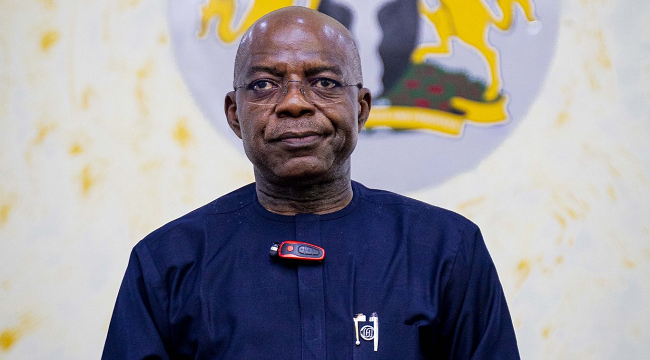
In this interview with EJIKE EJIKE, the Acting Vice-Chancellor of the African Aviation and Aerospace University (AAAU) in Abuja, Dr Mustapha Sheikh Abdullahi says the university will address Africa’s ageing aviation workforce and position Nigeria as the continent’s aviation education hub.
Can you provide the historical background of the Federal Government’s establishment of the African Aviation and Aerospace University?
The idea of establishing the university dates back to 2016 during the General Assembly of the International Civil Aviation Organisation (ICAO) in Montreal, Canada. At the time, there was a global consensus that the aviation industry was facing an ageing workforce and a shortage of specialised institutions focused not only on technical aviation training but also on aviation management.
Africa, in particular, had no dedicated aviation and aerospace university, prompting Nigeria to volunteer to host a Pan-African specialised aviation university in Abuja. Although the idea was conceived in 2016, bureaucratic processes delayed its implementation until 2022, when the Federal Ministry of Aviation and Aerospace Development engaged consultants to commence the establishment process.
How did you become involved in the establishment of the university?
In 2022, 18 experts in university administration were invited to participate in a selection process. At the time, I was serving as the Registrar of Ahman Pategi University in Kwara State. By the grace of God, I emerged as the successful candidate and was appointed as the first staff member with the mandate to establish the university from scratch. There were virtually no foundational documents, such as an academic brief or concept note, so we had to build everything from scratch.
When did the university receive official approval?
Final approval came on 7 May 2023, when the Federal Executive Council (FEC) approved the establishment of the university. Former President Muhammadu Buhari approved it. We immediately commenced documentation with the National Universities Commission (NUC) and the Joint Admissions and Matriculation Board (JAMB).
How did academic activities begin?
Initially, we operated from a single hotel until the Nigerian Safety Investigation Bureau (NSIB) provided us with temporary office accommodation. We partnered with agencies, including the Nigerian Meteorological Agency (NiMet), the Nigerian Civil Aviation Authority (NCAA), the Nigerian Airspace Management Agency (NAMA), and the Federal Airports Authority of Nigeria (FAAN), to support our academic programmes.
We also became one of the first universities in Nigeria to receive NUC approval to commence undergraduate and postgraduate programmes simultaneously.
What programmes does the university currently offer?
We offer programmes ranging from Aviation Business to Meteorology.
How has the university grown since its inception?
We admitted fewer than 50 students in our first intake in 2023, despite receiving nearly 1,000 applications, because we deliberately chose to grow gradually without compromising quality. Today, our student population is about 311, comprising both undergraduate and postgraduate students.
We have also secured 225 hectares of land for our permanent campus, and within two years, we have transformed what was once a forest into a rapidly developing university campus.
What achievements have you achieved in professional training?
In late 2024, we established a Directorate of Professional Training. We trained 167 aviation professionals in our first year, and by 2025, that number had increased to more than 500. We expect to train thousands this year as demand continues to grow.
Has the university attracted international students?
Yes. We currently have international students from Chad and Tanzania. We have also received interest from countries including Sierra Leone, Congo, and Cameroon, although we are expanding gradually to align with available infrastructure.
What international partnerships has the university established?
We have active Memoranda of Understanding (MoUs) with several leading aviation institutions worldwide, including universities in Australia, the French Civil Aviation University in Toulouse, France, and the Civil Aviation University of China.
We are also finalising an MoU with Embry-Riddle Aeronautical University in Florida, United States, which is regarded as one of the world’s leading aviation universities.