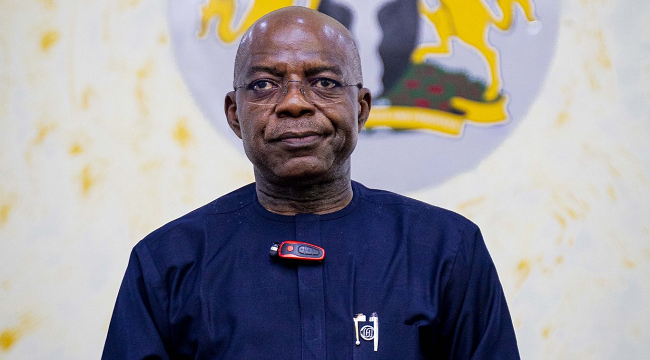
Former Member of the House of Representatives, Rt. Hon. Mark Terseer Gbillah, acting through his legal counsel, Chronos Legal & Co., has filed Freedom of Information (FOI) requests with 11 federal institutions. The filings demand statutory justification and official documentation regarding a Presidential directive that altered the Nigerian Upstream Petroleum Regulatory Commission (NUPRC) statutory Cost of Collection.
The inquiry centers on a July 7, 2023, memo from the Chief of Staff to the President directed to the Permanent Secretaries of the Ministries of Finance and Petroleum Resources. The directive restructured the NUPRC’s statutory 4% Cost of Collection, allocating 2.5% for operations and routine capital expenditure, while reserving the remaining 1.5% exclusively for upgrading crude oil and gas metering and transparency systems.
Through his legal representatives, Chronos Legal & Co., Gbillah is requesting records establishing the legal, constitutional, statutory and administrative basis for the directive, including its compliance with the Petroleum Industry Act, the Constitution of the Federal Republic of Nigeria 1999, as amended, the Public Procurement Act and other applicable laws. The requests also seek documents relating to the appropriation, expenditure, administration and management of the NUPRC Cost of Collection since July 2023, including approvals, budgetary provisions, treasury records, procurement documents, board resolutions and other relevant official records.
The FOI requests were served to the NUPRC, the Central Bank of Nigeria (CBN), the Office of the Chief of Staff to the President, the Federal Ministries of Petroleum Resources and Finance, the Office of the Accountant-General of the Federation, the Budget Office, the Bureau of Public Procurement, the Clerk of the National Assembly, the Nigerian Midstream and Downstream Petroleum Regulatory Authority (NMDPRA), and the Nigeria Extractive Industries Transparency Initiative (NEITI). Gbillah stated that the requests are intended to secure official information and documentary clarification through the rights available to every Nigerian under the Freedom of Information Act. He said the initiative is aimed at strengthening transparency, accountability and lawful management of public institutions and funds.
According to him, the statutory response period under the FOI Act has elapsed. However, acting on legal advice and in recognition of administrative delays within public institutions, the affected agencies are being allowed an additional grace period. Any institution that remains non-responsive will receive a final 72-hour notice, after which his lawyers will commence appropriate legal proceedings to compel compliance and pursue remedies available under the law.
The Central Bank of Nigeria (CBN) has responded but did not provide the requested information and documents. The Bank stated that the request for Certified True Copies fell within the Evidence Act rather than the FOI Act and asked that the request be directed to its legal department. Gbillah maintains that this CBN response is evasive and inconsistent with the applicable provisions of the FOI Act and said his legal representatives will formally respond while reiterating the statutory timeframe for compliance.
These FOI filings constitute the preliminary phase of an imminent domestic and international transparency initiative. Comprising former legislators, elder statesmen, and accomplished citizens, this coalition intends to utilize legitimate statutory avenues—including the FOI Act and whistleblower mechanisms—to systematically expose and combat corruption, illegal administrative decisions, nepotism, sexual harassment, criminal conduct, injustice, and judicial compromise across the public and private sectors.
Reiterating that these inquiries represent an unassailable civic right devoid of political motivation, Rt. Hon. Gbillah urged Nigerian citizens to fully acquaint themselves with their fundamental rights and actively utilize the FOI Act to hold custodians of the national commonwealth accountable. Gbillah emphasized that the exercise should not be construed as politically motivated, but recognized as the lawful exercise of a right available to every Nigerian, irrespective of political affiliation.