By Omeiza Ajayi
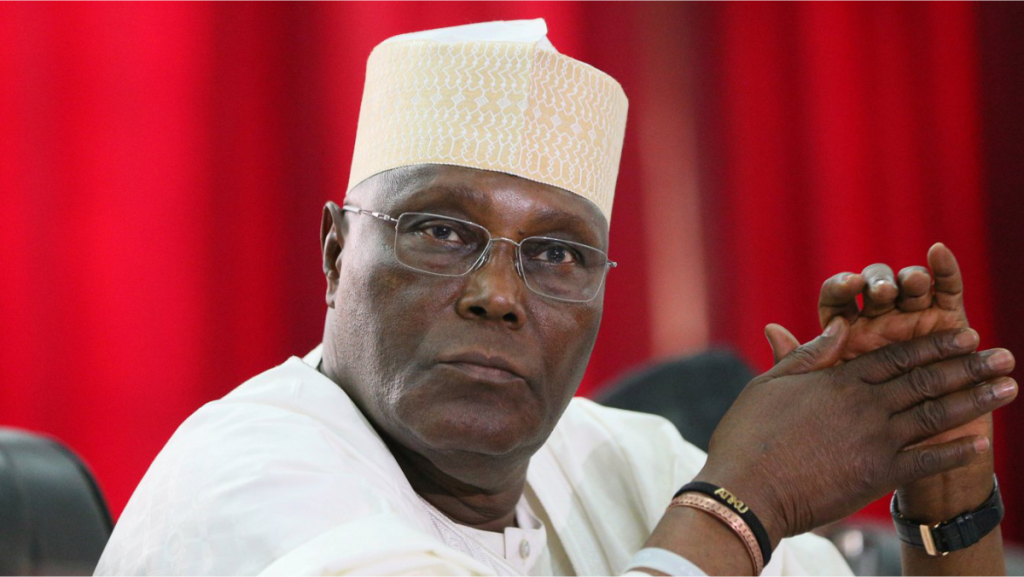
ABUJA: Presidential candidate of the African Drmocratic Congress ADC, Atiku Abubakar has said President Bola Tinubu’s decision to attack the media for reporting insecurity and economic hardship across the country is as absurd as blaming a thermometer for a fever, warning that denial does not change reality but merely postpones solutions.
Atiku, in a statement issued by his Senior Special Assistant on Public Communication, Phrank Shaibu, on Wednesday, said it was both astonishing and insulting that at a time when millions of Nigerians are struggling to survive, the administration has chosen to attack the messenger rather than confront the message.
“The latest comments from the Presidency reveal a disturbing disconnect between those who govern and the people they govern. Nigerians are enduring one of the most difficult periods in our recent history, yet instead of acknowledging their pain and outlining practical solutions, the government is attempting to persuade citizens that what they see, hear, and experience every day is somehow an illusion created by the media,” he said.
Atiku said the role of the media in a democracy is to amplify public concerns, not to praise those in power but to hold them accountable, and that blaming journalists for reporting insecurity and hardship defeats that constitutional purpose.
The former Vice President insisted that Nigerians do not need journalists to tell them whether they are hungry.
“The father who goes to bed wondering how to provide the next meal for his family does not need a newspaper report to confirm hardship. The mother who now pays three or four times more for basic food items than she did two years ago does not require a television broadcast to understand inflation. The small business owner whose capital has been wiped out, the graduate trapped in unemployment, and the pensioner whose savings have become worthless do not need media interpretation to understand their circumstances,” he said.
He said hunger has become one of the defining features of the Tinubu administration, with families across the country skipping meals, withdrawing their children from schools, abandoning healthcare, and making impossible choices between transportation, rent, food, and medicine.
“To suggest that this suffering is exaggerated is to mock the lived experiences of millions of Nigerians. It is to tell citizens that their empty pockets, unpaid bills, and empty kitchens are products of imagination,” Atiku said.
On insecurity, he said the Presidency’s attempt to shift blame to the media was even more reprehensible, reeling off a litany of violence the media had no hand in creating.
“The media did not invent the killings in Benue. The media did not invent the massacres in Plateau. The media did not invent the bandit attacks in Zamfara, Katsina, and Niger. The media did not invent the abduction of school children and teachers in Oyo. The media did not invent kidnapping-for-ransom, which has become one of the country’s fastest-growing criminal enterprises. The media did not invent terrorism, nor did it create the criminal gangs that continue to terrorise communities and disrupt economic activities across the nation.
“The farmer who cannot access his farmland because armed men have taken over his community does not need media validation. The trader who fears travelling on Nigerian highways does not need a newspaper headline. The parents who send their children to school with anxiety over the possibility of abduction do not need television analysis to understand the security situation,” he said.
He warned that governments often lose touch with reality when they become more concerned with managing narratives than solving problems, invoking a proverb to drive home the point.
“There is an old African proverb that says a man who covers his eyes cannot stop the sun from rising. Denial does not change reality. It merely postpones solutions,” Atiku said.
The former Vice President questioned the moral basis of an administration that blames the media for exposing the consequences of its own policies.
“When this administration awarded a ₦2 trillion agricultural mechanisation contract to a controversial Belarusian businessman who publicly claims to be President Tinubu’s classmate, did it invite the media into the room before signing the deal? When food prices skyrocketed, was it the media that raised them? When the naira collapsed, was it the media that devalued it? When insecurity spread across communities, was it the media that armed the criminals?
“The truth is simple: the failures of this administration are rooted in the outcomes of its policies, not in the reporting of those outcomes. It is therefore both irresponsible and insensitive to blame the media for conditions created by government decisions,” he said.
He said the administration’s failures are hidden in plain sight, visible in the astronomical cost of living, the soaring prices of food, transportation, electricity and cooking gas, an energy sector that delivers darkness at ever-increasing costs, and the steady erosion of hope among ordinary citizens.