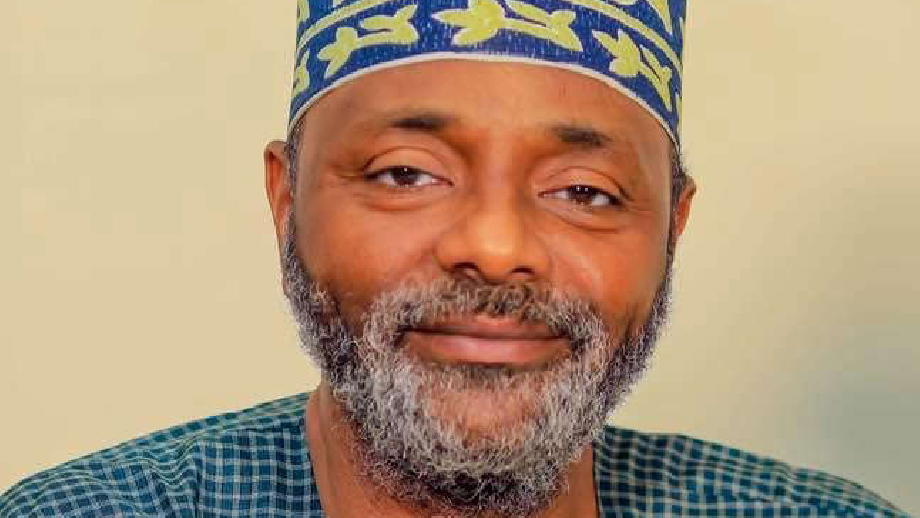
By Issa Aremu
Monday, May 25, 2026, marked Africa Day (AD). The annual observance commemorates the 1963 founding of the Organization of African Unity (now the African Union). The manifestation celebrates Pan-Africanism, cultural identity, and the continent’s progress. This year’s observance assumes historic importance. It marks the 63rd anniversary of the OAU (1963–2026). The African Union (AU) celebrates AD with the theme: “Sixty three (63) Years of Unity, Integration and Development, let’s celebrate together”!
Against the backdrop of the clarion call by the African Union that Africans should celebrate together, Michael Imoudu National Institute for Labour Studies (MINILS), Ilorin; the Nigerian Institute of International Affairs (NIIA), Lagos; and the Friedrich Ebert Stiftung (FES Nigeria), the German foundation promoting the values of social democracy with respect to social justice, democracy and peace, jointly organized a collaborative policy dialogue on Thursday, 21 May, on the theme: “Rising Global Conflicts, Severe Economic Shocks on the Decent Work Agenda in Africa”.
It cannot be overstated that the world today witnesses conflicts of varying proportions. Avoidable. Unacceptable. Globally, there are an estimated over 130 active armed conflicts.
The global media understandably dramatizes the four year old Russia–Ukraine war and the heightened, addictive conflicts in the Middle East. But the African continent sadly also accounts for roughly 40 per cent of the world’s armed conflicts. There are more than 50 ongoing active conflict hotspots, a figure that has grown by 45 per cent in recent years and has driven massive humanitarian crises. African conflicts are long dated. Almost forgotten, too. Major theatres of war include the two Sudanese tragic civil wars, the resurgence of the M23 rebel offensive and other insurgencies in the Democratic Republic of the Congo (DRC), long standing battles with al-Shabaab in Somalia, and widespread instability across the Sahel (including Burkina Faso and Mali). Paradoxically, the theme for 2020 Africa Day was: “Silencing the Guns in the context of COVID 19”. I reflected then that “Any terrestrial body from outer space reading about the chosen theme would be right to define the continent almost in terms of double jeopardy of scores of wars of attrition and a global pandemic devastating the continent.”
Since 2020, many avoidable armed conflicts are still suffocating the African continent. They include the South Sudan war with an estimated 400,000 deaths, and the decade long senseless Boko Haram killing spree which has claimed some thousands of women and children. The historic conflicts were no less wasteful of human lives: the Nigerian Civil War—1967–70—with over 1 million deaths, mostly civilians; the Rwandan Genocide—1994; the Liberian Civil War from 1989 until 1997. Liberia, a country of less than 5 million, lost 250,000 with many thousands displaced. Nigeria reportedly spent $12 billion and lost over 1,000 troops on the Liberia peace campaign within the Economic Community of West African States (ECOWAS) in the ’90s. What about the decade long wars of attrition of the Libyan warlords?
Violence on the continent has displaced over 35 million people, accounting for nearly half of all conflict displaced populations. Armed conflicts in and around the DRC accelerate the spread of Ebola by displacing populations into new regions, breaking down disease surveillance networks, and forcing medical responders to operate in dangerous “red zones.”
However, the point can’t be overstated: the vision of the founding fathers and mothers of the AU was transformative and revolutionary rather than managing avoidable conflicts. The motivation was unity as a means as much as an end.
As of May 2026, the intensifying conflict in the Middle East, particularly following the escalation around February 28, 2026, has triggered severe global economic shocks with a big bang in Africa. The crisis, characterized by significant disruptions to maritime energy routes (Strait of Hormuz), has damaged infrastructure and heightened uncertainty, which are driving inflation and threatening a global recession in 2026.
The impact of addictive global violence on labour and employment is better imagined: loss of lives, livelihoods, job losses and insecurity. Many working men and women have lost their lives to violent conflicts, insurgencies and banditry. In directly affected areas, workplaces are destroyed, leading to high unemployment; businesses are closing, and worker incomes are facing immediate strain. Irregular and forced immigration has also increased, leading to xenophobic attacks in countries like South Africa. Since Africans in 1994 rose in unity to condemn apartheid and racism as crimes against humanity, hundreds of African nationals have been killed in xenophobic violence in South Africa—the epicentre of anti migrant violence on the continent. Nothing is more unacceptable than this madness of violence of blacks on blacks called xenophobia!
Labour market experts have raised the alarm that violent conflicts in Africa and the worsening economic crisis globally are getting worse. For countries like Nigeria, whose economic stability is closely tied to global oil markets and international trade dynamics, these developments pose serious challenges. Rising fuel costs, food insecurity, currency fluctuations and declining purchasing power have profound implications for workers, businesses and governance structures.
It is against the backdrop of the above disruptions occasioned by the global economic crisis that the Michael Imoudu National Institute for Labour Studies (MINILS), Ilorin, a premier institution dedicated to labour education and industrial relations, in collaboration with the Nigerian Institute of International Affairs (NIIA), Lagos, and the Friedrich Ebert Stiftung (FES) seeks to provide a strategic platform for citizenship engagement on the pressing issues of conflict, economic crisis and the impact on the labour market. The engagement complements the Renewed Hope Agenda of President Bola Ahmed Tinubu with respect to promoting economic reforms and development.
The intersection of global economic crises, rising global conflicts and labour realities calls for informed, coordinated and forward looking responses. Organized labour and civil society organizations (CSOs) have critical roles to play in advocating against wars and violence, advocating for workers’ welfare, influencing policy and promoting social justice during periods of economic instability.
•Issa Aremu is the Director General of Michael Imoudu National Institute for Labour Studies (MINILS), Ilorin, and Member, National Institute, Kuru Jos.