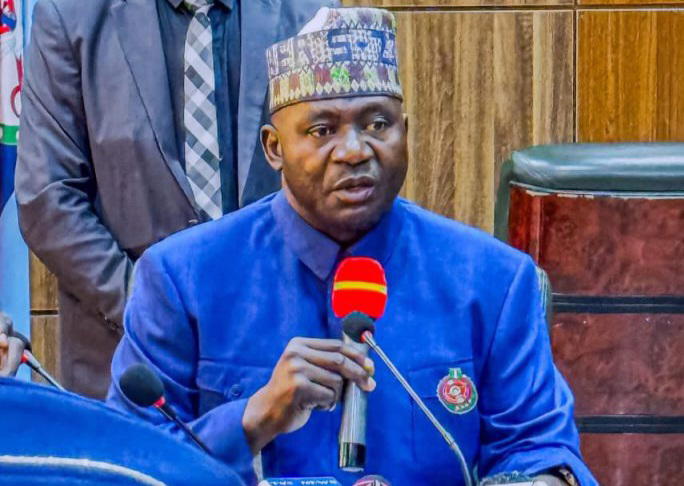
The First Lady, Senator Oluremi Tinubu, and the Minister of Defence, General Christopher Musa (rtd.), have warned Nigerian youths against allowing politicians and criminal elements to manipulate them into violence as political activities gather momentum ahead of the 2027 general elections.
The duo, who spoke separately at the National Christian Youth Security Summit and Thanksgiving in Abuja, urged young Nigerians to reject political violence, drug abuse, extremism, criminality and other activities capable of jeopardising their future and the security of the country.
The summit, organised by the National Youth Wing of the Christian Association of Nigeria (YOWICAN), is holding from September 3 to 5 at the National Christian Centre, Abuja, under the theme, “Empowered for Leadership, Service and Nation Building.”
Tinubu, represented by the executive secretary of the Nigerian Christian Pilgrim Commission (NCPC), Rt. Rev. Stephen Tunde Adegbite, warned youths against becoming “sacrificial lambs” for politicians during the forthcoming election season.
She urged them to channel their energy towards prayer, peaceful democratic participation and nation building rather than allowing themselves to be recruited for political violence.
“We are meeting at a very crucial time in the history of our great nation, the period when we are moving towards another election, and it should be a period that none of you will be used as a sacrificial lamb.
“We don’t want any politician to use you and waste your life. All we want from you is to pray for Nigeria. All we want from you is to continue to pray for Mr President and all political appointees, all our governors, all our senators, all our House of Assembly members and all our House of Representatives members, so that Nigeria will be a better place,” she said.
The First Lady also called for greater cooperation between Christian and Muslim youths, saying religious and ethnic differences must not be exploited to create division and violence.
According to her, both Christianity and Islam are religions of peace and their adherents must work together to secure the country.
“As the Muslim and the Christian in Nigeria, we must work together. We are brothers, we are sisters, and we must see ourselves as one. It is when you have peace that you can talk of progress,” she said.
She questioned how meaningful nation building could take place in an atmosphere of rancour, animosity, acrimony and killings, insisting that violence could not be justified in the name of religion.
“How can you build a nation with rancour, with animosity, with acrimony, with killings, in the name of which religion? Not for Christianity and not for Islam. The two religions are religions of peace, and we must ensure peace everywhere that we go,” Tinubu said.
On her commitment to young Nigerians, the First Lady said she had prioritised their welfare and would continue to advocate for initiatives capable of improving their lives.
She highlighted some interventions by the Tinubu administration, including mobility support across the six geopolitical zones and educational assistance for Nigerians whose parents could not afford university education.
She said more interventions would be implemented, while urging youths to remain supportive of efforts to build a better country.
Tinubu assured the youths that their concerns would continue to receive attention from government, stressing that the administration remained committed to ensuring that their voices were heard.
Similarly, the Defence Minister, General Christopher Musa (rtd.), warned that the vulnerability of young Nigerians to manipulation, criminal recruitment, drug abuse and violent extremism constituted a major national security concern.
Musa, represented by the special adviser on Security and Intelligence to the Minister of Defence, Musa Likita, said youth empowerment should be treated as a national security strategy.
He argued that an educated, skilled and economically empowered young person was less vulnerable to manipulation by criminal and extremist groups.
“Leadership without empowerment is fragile. Empowerment without responsibility can be dangerous, and service without patriotism cannot produce sustainable nation building,” he said.
The minister said national security was not the sole responsibility of the armed forces, police and other security agencies, but a collective responsibility involving every citizen.
“The armed forces can defend our territorial integrity. The police and other security agencies can enforce the law. Intelligence institutions can gather and analyse information. But no security architecture can succeed if citizens refuse to play their part,” he said.
Musa described Nigerian youths as a strategic component of the country’s security architecture, stressing that their energy, creativity, technological capacity and entrepreneurial potential could either strengthen or undermine national security.
He warned that youths recruited into criminality, violent extremism, cybercrime, drug abuse, ethnic hatred, religious intolerance and political violence could cause devastating consequences for the country.
“An empowered young person is less vulnerable to manipulation. An educated young person is better equipped to distinguish truth from misinformation. An employed youth has greater opportunity to build rather than destroy,” he said.
The Defence Minister also cautioned against the use of drugs and financial inducements to manipulate young Nigerians into violent activities.
He recounted an experience involving young people who were allegedly given substances, including Indian hemp and other drugs, alongside financial incentives, to influence their participation in activities.
According to him, such tactics were intended to prevent young people from thinking clearly and making independent decisions.
He therefore urged youths to resist anyone attempting to buy their loyalty or manipulate them into violence, stressing that temporary financial rewards could not compensate for the loss of their future.
Musa said the concept of national security had evolved beyond military hardware and territorial defence to include economic, food, energy, cyber, environmental, community and human security.
He warned that misinformation and disinformation, particularly through social media, could divide communities within minutes, while unemployment and vulnerability could make young people easy targets for criminal networks.
He called for a comprehensive approach combining “hard power with soft power, military capability with social development, law enforcement with prevention, and security operations with empowerment.”
The minister told the youths that contributing to national security did not necessarily require joining the military, police or other security agencies.
He urged them to avoid spreading unverified information, report suspicious activities through lawful channels, reject criminal recruitment, promote peaceful coexistence and stand against cultism, drug abuse and violence.
He further challenged Christian youths to take the values of their faith beyond the church into their communities, schools, workplaces, businesses and public life.
“Nigeria does not need a generation that merely speaks about righteousness. Nigeria needs a generation that practises righteousness,” he said.
Musa identified the battle for the minds of young Nigerians as one of the country’s greatest security challenges, noting that criminal and extremist organisations exploit poverty, frustration, grievances and misinformation to recruit followers.
He therefore urged stakeholders to create a stronger alternative for young Nigerians by making education valuable, rewarding hard work, encouraging innovation and promoting service to the nation.
The minister also urged Nigerian youths to take advantage of emerging technologies, including artificial intelligence, cybersecurity, data science, robotics, engineering and software development.
He said Nigeria could not afford to remain merely a consumer of technology, but must develop young Nigerians capable of designing solutions to the country’s security and developmental challenges.
According to him, young Nigerians who develop technologies capable of detecting criminal networks, protecting critical infrastructure, securing digital systems or improving emergency response would be making direct contributions to national security.
Musa called on families, churches, schools, youth organisations, the private sector and government to work together to prepare young Nigerians for responsible leadership.
He challenged youths to abandon the mindset that Nigeria owed them everything and instead ask what they could contribute to the country.
“What can I build? Whom can I help? What problem can I solve? What young person can I mentor? What conflict can I prevent? What community can I improve? What innovation can I create? What example can I set?” he asked.
The minister assured that the defence and security establishment recognised the importance of Nigerian youths and would continue to work with relevant institutions to strengthen national resilience and protect the nation’s territorial integrity and constitutional order.
He stressed that security must also address the social and economic conditions that expose young people to criminal exploitation and violent extremism.
The minister urged the youths to make peace, patriotism, service and responsible citizenship the foundation of their participation in Nigeria’s political and national life.
Musa said the Nigeria of the future could not be built by government alone, but required the collective efforts of teachers, farmers, entrepreneurs, engineers, doctors, clergy, journalists and young Nigerians.
He urged youths not to allow anyone to weaponise their faith or ethnicity against fellow citizens or convince them that violence was the pathway to a better future.
“The security of Nigeria is not merely about protecting our borders. It is about protecting the Nigerian dream,” Musa said.
He added that the dream could only survive if the next generation was prepared to defend it “not only with weapons where necessary, but with character, knowledge, service, innovation, patriotism and faith in our common destiny.”